Rent vs Buy in Lancaster PA: What Waiting for Lower Rates Really Cost
Rent vs Buy in Lancaster PA: What Waiting for Lower Rates Really Cost
If you've been renting and waiting for mortgage rates to come down before you buy, I want to show you what that wait has actually cost here in Lancaster.
Let me say this first. Renting is not throwing money away. I hear that line all the time and it's just not true in a lot of cases. Renting can be a genuinely smart choice, especially if you're not planning to stay in one place for very long.
But there's a question most people never sit down and answer properly: did waiting actually leave you better off? In this post I'm going to walk through two real properties in Lancaster, compare the numbers side by side, and then zoom out to see what a three-year wait looks like over the full life of a 30-year mortgage.
Option One: Buying a $229,000 Lancaster Home
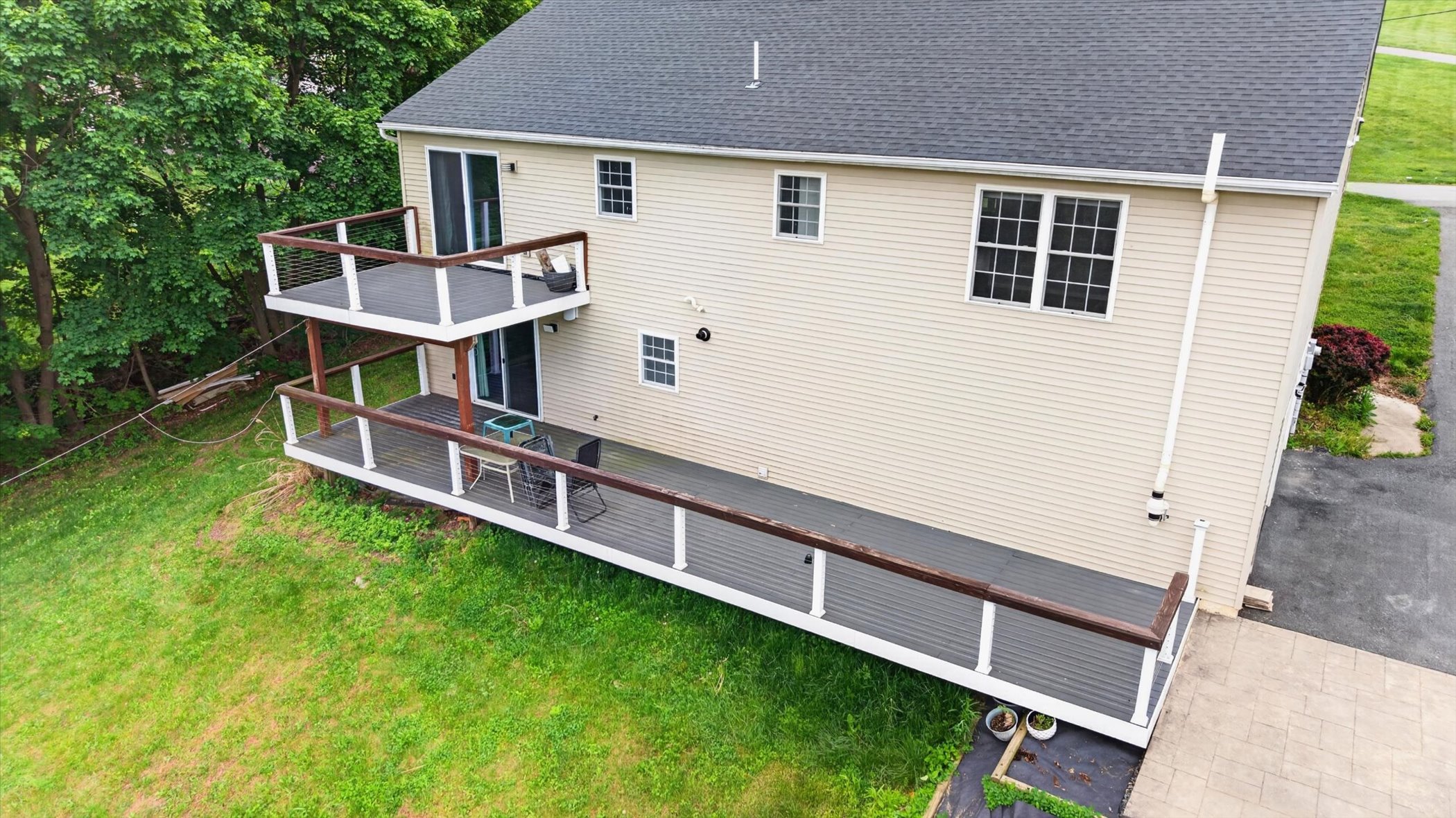
The first property is listed at $229,000. It's pretty much move-in ready, so most of the major work has already been done. You can move in without worrying about a list of renovations. It also has a low-maintenance backyard, which is great for having people over or just sitting out in the evening.
Here's where it gets interesting for first-time buyers. There's a 0% down mortgage program available here in Lancaster through Fulton Bank. That means you may be able to buy this home without saving up a traditional down payment. Program terms and eligibility vary, so always confirm the details with the lender directly.
Without any seller help, your estimated cash to close would be around $12,000. That covers things like lender fees, title, prepaid taxes, and insurance. Seller help is when the seller agrees to put money toward your closing costs as part of the deal. If you negotiated 3% seller help, that could bring your cash to close down to somewhere around $5,000 to $7,000.
Your all-in monthly payment, including principal, interest, taxes, and insurance, would be about $1,800 a month. Keep that number in mind.
Option Two: Renting a Townhome on Mulberry Street
The rental is a three-bedroom, one-and-a-half-bath townhome on Mulberry Street in Lancaster. At around 1,900 square feet, it's quite a bit bigger than the 1,000 square foot home above. It's also renting for $1850 a month. Full townhomes like this are genuinely hard to find as rentals here. More often you'd be looking at an apartment for a similar price.
So Which One Wins on Monthly Cost?
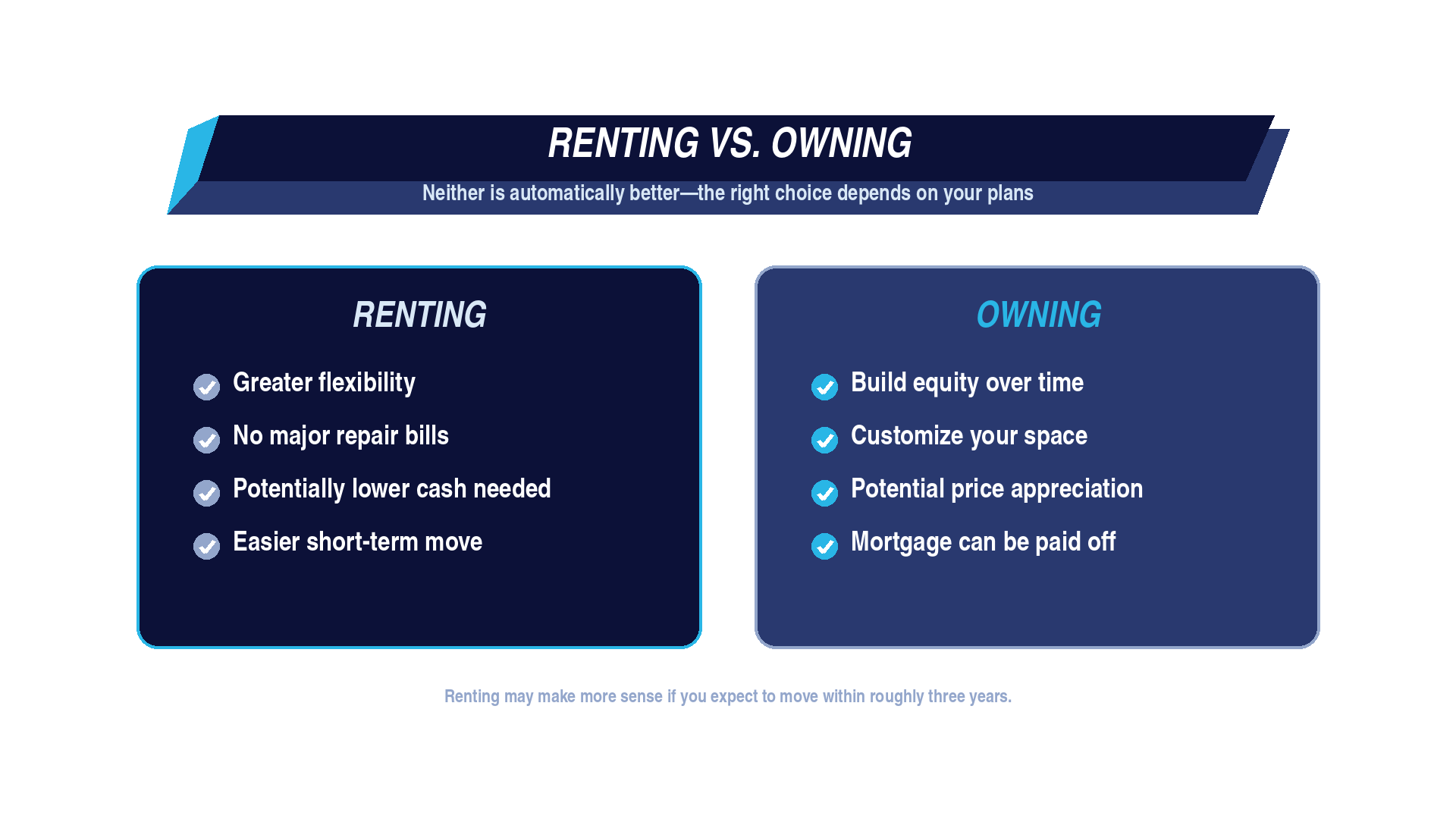
In a lot of cases, renting wins on monthly cash flow, and I want to be honest about that. As a homeowner you're paying property taxes, homeowners insurance, and repairs. Over 30 years, something is going to break. A roof, a water heater, an HVAC system. Budgeting around 1% of the home's value each year for maintenance is a sensible rule of thumb, which is roughly $190 a month on a $229,000 home.
As a renter, most of that isn't your problem. You're paying rent, utilities, and a small amount for renter's insurance.
Renting also gives you flexibility. If your job changes, your family grows, or you realise you don't actually like the area, moving is a lot easier and a lot cheaper. Selling a home costs money. Ending a lease usually doesn't cost nearly as much.
So there are real reasons to rent. If you're not planning on staying somewhere longer than about three years, renting often makes more sense, simply because the costs of buying and then selling again eat into any gain.
Lancaster Home Prices Over the Last Three Years
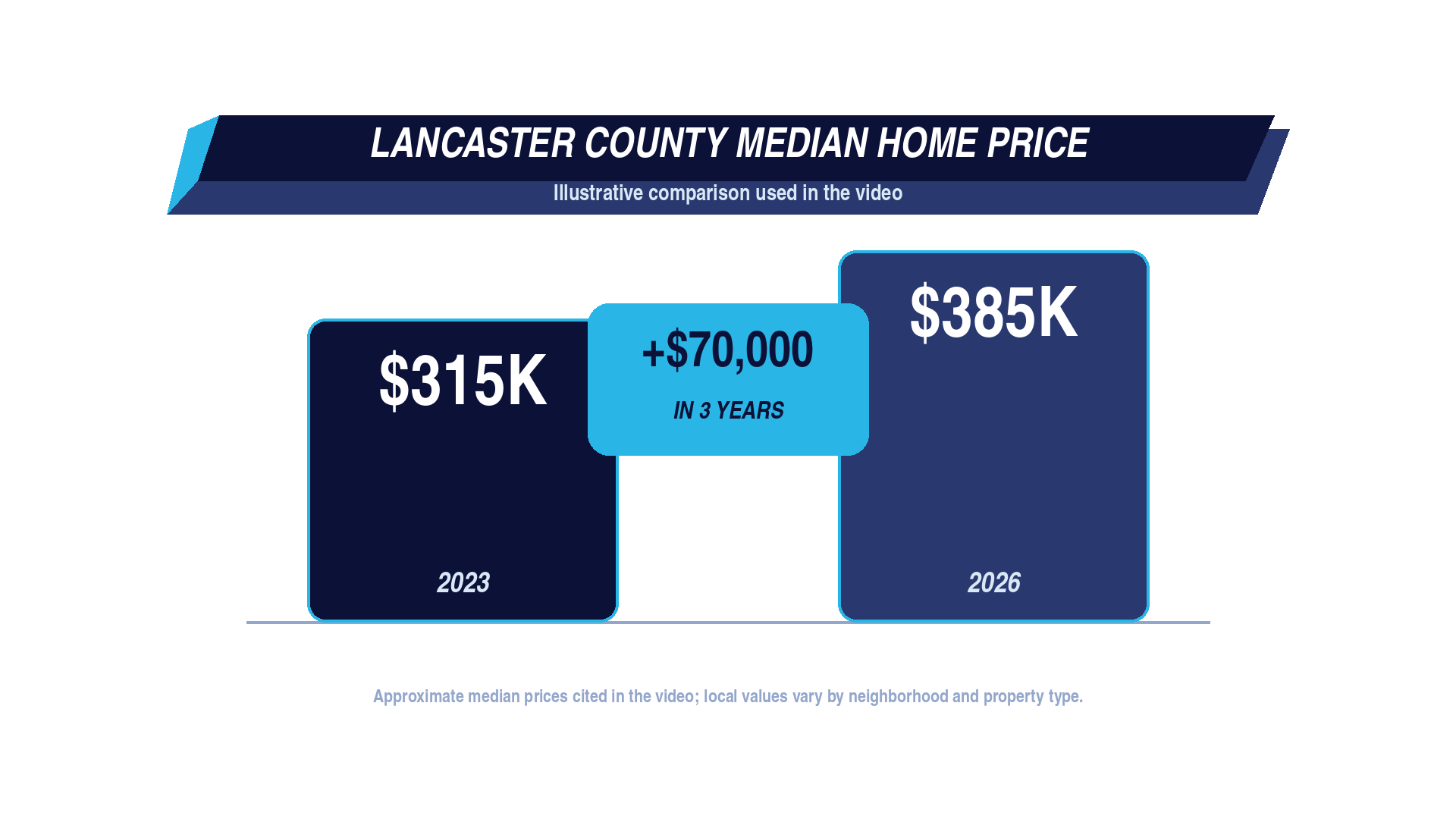
This is where it gets really interesting. Back in 2023, the median home price in Lancaster County was around $315,000. Today it's around $385,000. That's roughly a $70,000 increase in about three years.
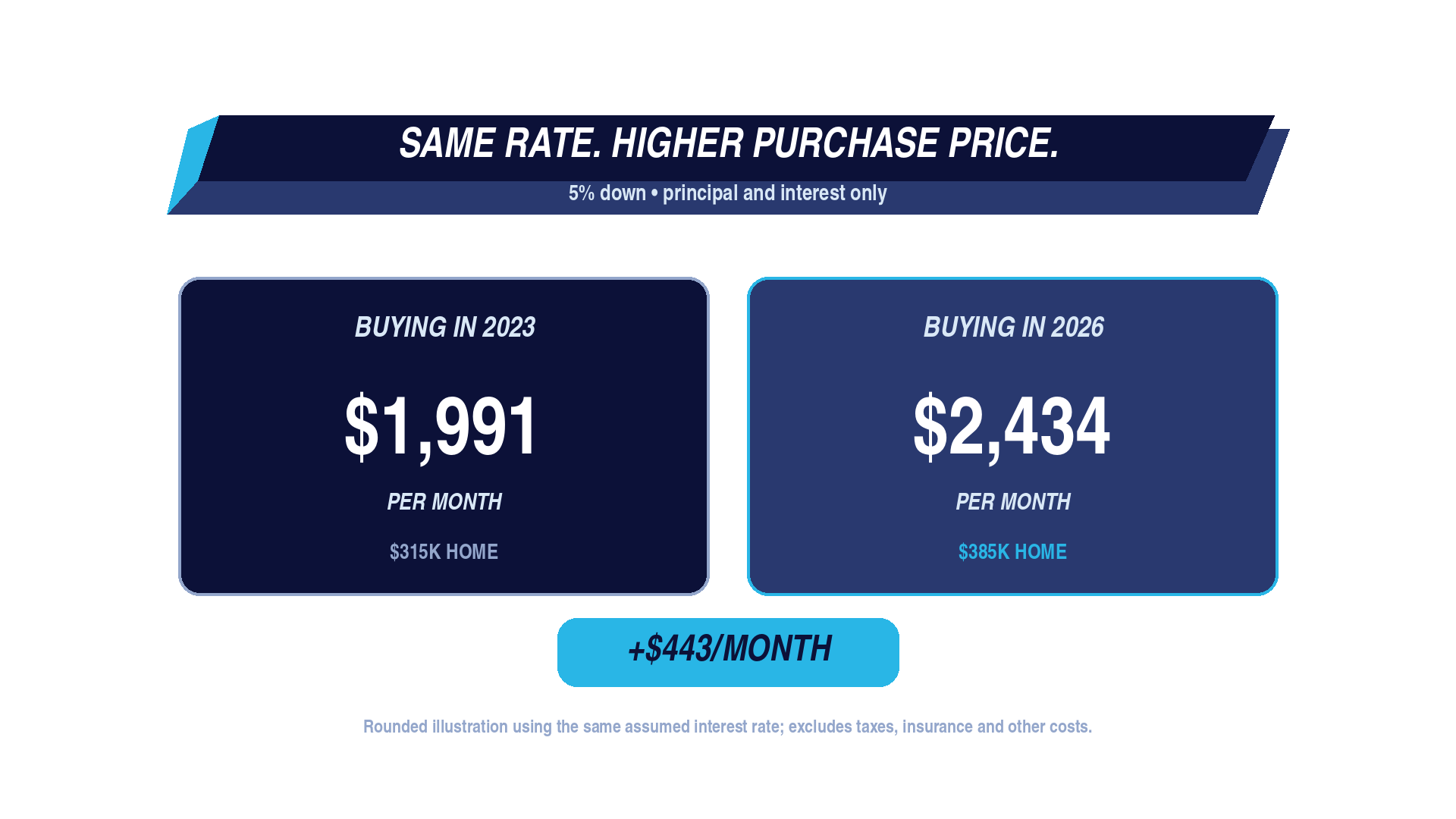
To keep the comparison fair, I'm going to use the same interest rate for both buyers: 7%, with 5% down and a 30-year loan. That way, the only thing that changes is the price.
Buying in 2023 at $315,000
Down payment: $15,750
Loan amount: $299,250
Principal and interest: about $1,991 a month
Buying Today at $385,000
Down payment: $19,250
Loan amount: $365,750
Principal and interest: about $2,433 a month
That's around $442 more every single month. And notice, that's not because rates changed. It's purely because you're borrowing $66,500 more for the same kind of home. You'd also need $3,500 more saved just for the down payment.
There's another number worth looking at. Over the full 30 years, the 2023 buyer pays roughly $417,000 in interest. Today's buyer pays roughly $510,000. That's about $93,000 more in interest alone, at exactly the same rate.
"But Albert, I Rented and Saved the Difference"
This is the argument I hear all the time, and honestly, it's a good one. If renting kept your housing costs lower and you were disciplined enough to save or invest the difference, that's exactly what you should have done. You're in a much better position than someone who didn't.
But here's the question. Did your savings keep pace with a $70,000 jump in prices?
Let's say you did really well and saved an extra $40,000 over those three years, and you put every penny of it toward your down payment today. Your loan would be about $325,750, with a principal and interest payment of around $2,167 a month. That's still around $176 a month more than the person who bought in 2023 with just 5% down. You saved hard for three years, and you're still behind.
And the 2023 buyer hasn't been standing still either. Over those three years, they've paid down roughly $9,800 of their loan. Add the $70,000 in price growth, and they've built around $80,000 in equity, on paper at least, just by owning through that stretch.
The 30-Year Math: Where the Gap Really Opens Up
Here's the part most people never think about. The 2023 buyer is already three years into their 30-year mortgage. If you buy today, you're starting your 30 years now. So let's take both buyers all the way to the end.
Step one. The 2023 buyer's payment is about $442 a month lower. If they invested that $442 every month into an S&P 500 index fund for the remaining 27 years of their mortgage, and it averaged a 7% return, it could grow to roughly $423,000. And at the end of those 27 years, their home is paid off.
Step two. The person who waited still has three years of payments left at that point. The 2023 buyer, whose mortgage is now gone, can invest what used to be a mortgage payment. Investing around $2,433 a month for those three years at 7% could add roughly another $97,000.
Put those together, and the gap between the two paths comes to roughly $520,000.
![Opportunity cost of waiting to buy a home in Lancaster PA]](https://assets.cdn.filesafe.space/3GSn19jynDd7uoElPzSM/media/6abdb556b54f11872a5b4d43.png "Opportunity cost of waiting to buy a home in Lancaster PA]")
What This Number Does and Doesn't Mean
I want to be really clear here. This does not mean everyone who waited has literally lost $520,000. It's an example built on the median home price, and real life is messier than a spreadsheet.
Investments don't return 7% every year. Some years are up 20%, some are down. Home prices don't rise in a straight line either. People refinance when rates drop, which would change the 2023 buyer's numbers. People move, repairs happen, and a disciplined renter could be investing aggressively the whole time.
What I'm really showing you is the opportunity cost of waiting for rates to fall. And from where we sit right now, it doesn't look like rates are going back to 3% or 4% any time soon. Whilst you're waiting, home prices can rise, rents can rise, and most importantly, you're pushing back the date your housing payment eventually disappears.
The Value That Doesn't Show Up in the Numbers
Homeowners often pay more each month, but they're usually getting more for it. Maybe it's extra square footage, a yard, or a garage. Maybe it's a slightly better area, or more privacy.
There are also tax benefits to owning, which I'll cover properly in a separate post. And there's something to be said for simply being able to paint the walls whatever colour you want, or rip out the kitchen and make the place completely yours. That has value too, even if you can't put an exact number on it.
So Should You Rent or Buy in Lancaster?
If you're only planning to stay somewhere for two years, renting almost certainly makes sense. Don't let anyone pressure you out of that.
But if you're planning to stay in Lancaster for five to 10 years, you're financially prepared, and the only reason you're holding off is hoping rates drop back to where they were, I'd be very careful. Trying to time the market rarely works. Time in the market usually does.
The last three years have shown us something pretty clearly. Waiting for rates to come down doesn't guarantee you a lower payment. In Lancaster, it's often meant a higher one.
Want to See If Buying Makes Sense for You?
Every situation is different, and the only way to know for sure is to run your own numbers. If you want to see whether buying could work for you, what you could afford, and which programs you might qualify for, reach out to me here: https://www.albertlinsdell.com/book
Not from the area? Read my guide on what it's really like living in Lancaster PA: https://www.albertlinsdell.com/living-in-lancaster
Wondering what your budget actually gets you? See what $300,000 buys you in Lancaster today:
The figures in this post are illustrative examples based on median prices and assumed rates and investment returns. They are not financial advice. Loan programs, rates, and terms vary by lender and borrower. Please speak to a licensed lender and financial advisor about your own situation.
Albert Linsdell, REALTOR, License RS370047 TruAdvantage Team, Powered by Real Broker LLC (717) 347-0597