How Much Down Payment Do I Really Need in Lancaster PA?
How Much Down Payment Do I Really Need in Lancaster PA?
Short answer: you do not need 20% down to buy a home in Lancaster PA. Most of my buyers get in with 3% to 5% down, and some put down nothing at all. The real question isn't "how much do I need?" It's "how much should I put down and still have cash left for closing costs and life?"
Let's run the numbers on a $300,000 Lancaster County home.
Minimum down payment by loan type
Here's what each major loan program asks for at the minimum:
Conventional: as little as 3% down for qualified buyers. Under 20% down, you'll pay private mortgage insurance (PMI) until you build enough equity to drop it.
FHA: 3.5% down with a credit score of 580 or higher. Scores from 500 to 579 can still qualify, but you'll need 10% down.
VA: 0% down for eligible veterans, service members and some surviving spouses.
USDA: 0% down in eligible rural areas. A lot of Lancaster County outside the city and the denser suburbs can qualify, so check the address before you rule it out.
So the "20% rule" is a myth. Twenty percent is what you put down to avoid mortgage insurance. It's not the price of admission.
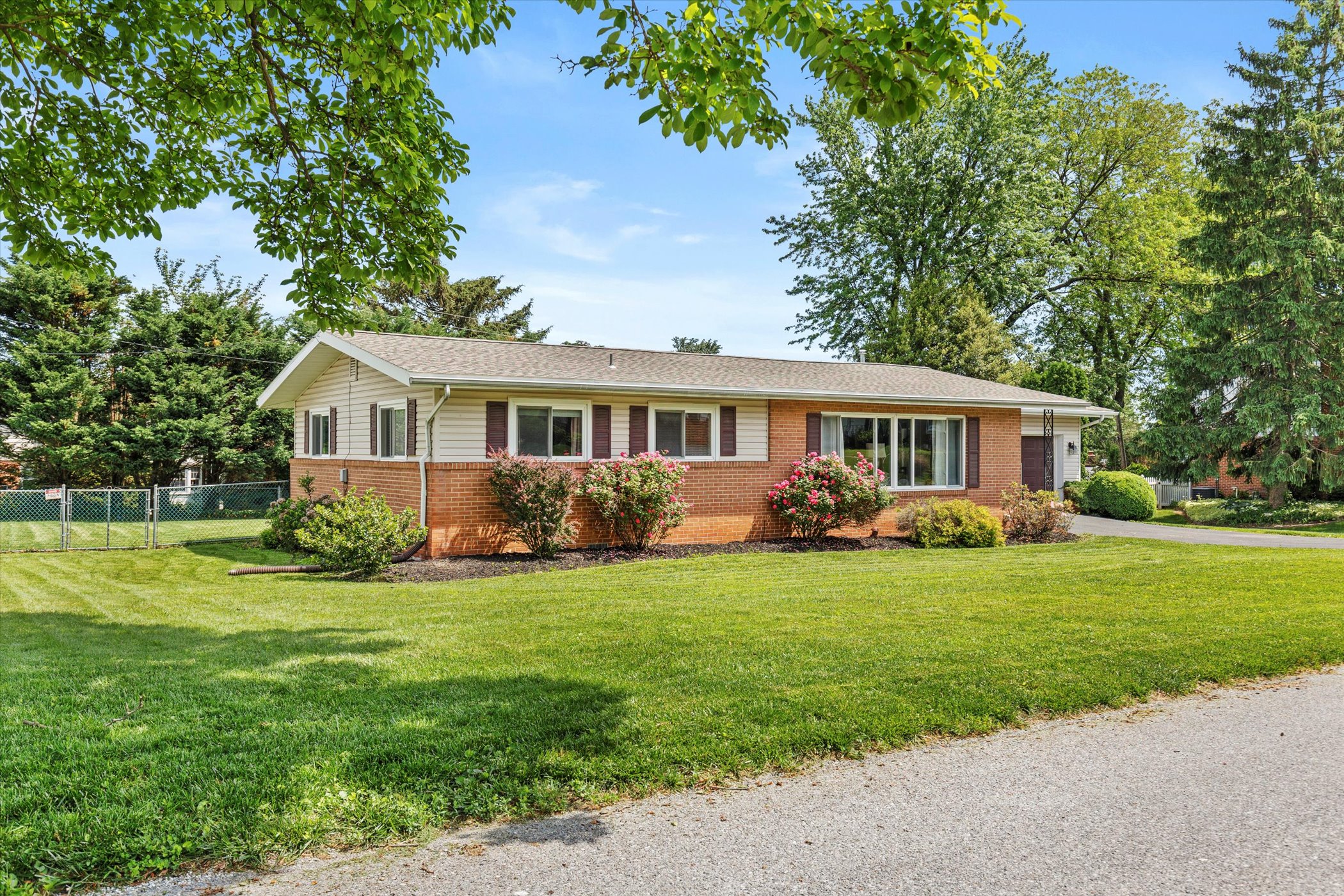
The numbers: $300K home in Lancaster County
Here's the down payment and the monthly principal and interest at 7.40%, the 30-year average in Freddie Mac's survey for the week of October 15, 2026. Your actual rate depends on your credit, loan type and lender, and taxes, insurance and mortgage insurance come on top of these figures.
3% conventional: $9,000 down, $291,000 loan, about $2,015 a month.
3.5% FHA: $10,500 down, $289,500 loan, about $2,004 a month.
5% conventional: $15,000 down, $285,000 loan, about $1,973 a month.
20% conventional: $60,000 down, $240,000 loan, about $1,662 a month, with no PMI.
Look at the gap between 3% and 20%. That's $51,000 more cash up front to save about $353 a month in principal and interest, plus the PMI.
Now think about how long it takes to save $51,000. At $1,000 a month, that's more than four years. Four years of rent checks. Four years of not building equity. And in a county where the median sold price was $370,000 in September and still up from a year ago, the house you want might cost more by the time you get there.
That's why I tell people: don't wait for 20%. Run your numbers. If the payment fits your budget at 3% or 5% down, you can buy now and refinance later if rates come down.
Don't forget closing costs and reserves
This is where buyers get caught. Your down payment is not the only check you write at settlement. You also have closing costs: lender fees, title insurance, prepaid taxes and homeowners insurance, and your share of Pennsylvania's realty transfer tax. Your lender's Loan Estimate will spell out the exact figure for your deal, so ask for one early.
Then keep a cushion after closing. The water heater doesn't care that you just moved in. I'd rather see a buyer put 3% down and keep a few months of payments in savings than drain every account to hit 5%.
Ways to cut your cash to close
This is the fun part. There's almost always a program or structure that gets you in the door with less cash.
PHFA Keystone Advantage Assistance. The Pennsylvania Housing Finance Agency offers up to 4% of the purchase price or $6,000, whichever is less, for down payment and closing costs. It's a 0% interest second mortgage repaid over 10 years. On a $300,000 home, 4% is $12,000, so you'd get the $6,000 cap. That covers most of a 3% down payment by itself. You need a 660 credit score, a PHFA first mortgage, and you have to meet the program's income and asset limits. Details are on PHFA's Keystone Advantage page.
Seller assist. You can ask the seller to pay part of your closing costs as part of your offer. Each loan type caps how much a seller can contribute, and in a competitive market you'll need to structure it carefully, but it's a real tool.
Gift funds. Parents or family can gift money toward your down payment on most loan types. It needs to be documented with a gift letter, so plan ahead and don't move cash around at the last minute.
Piggyback loans. An 80/10/10 structure pairs a first mortgage at 80% with a second loan for 10%, so you put 10% down and skip PMI. It doesn't fit everyone, but for the right buyer it's worth pricing out.
I covered a real-world version of stacking these in how to buy a home for $1,000 in Lancaster.
So how much should you put down?
My rule of thumb:
Put down enough to qualify for the loan that gives you the best overall cost.
Keep enough cash for closing costs and a real emergency fund.
Don't wait years to hit 20% if the payment works today.
If you're torn between FHA and conventional, I break down the trade-offs in FHA vs conventional in Lancaster. And if you're wondering what it costs to keep renting while you save, read what waiting for lower rates really costs in Lancaster.
Frequently asked questions
Can I buy a house in Lancaster PA with no money down?
Yes, if you qualify for VA or USDA financing. VA is for eligible veterans and service members. USDA covers eligible rural addresses, and many parts of Lancaster County qualify. You'll still need to cover closing costs, though seller assist or assistance programs can help.
Is 3% down really enough for a conventional loan?
For qualified buyers, yes. You'll pay PMI until you build enough equity to remove it, but that's often cheaper than waiting years to save 20%.
Can my parents give me money for a down payment?
On most loan types, yes. Your lender will need a signed gift letter and records showing where the money came from. Talk to your lender before the money moves.
Does PHFA help with down payments in Lancaster County?
Yes. PHFA's Keystone Advantage Assistance offers up to 4% of the price or $6,000, whichever is less, at 0% interest. You need a 660 credit score and a PHFA first mortgage, and you have to meet the program's limits.
What happens to my PMI later?
On a conventional loan, PMI can come off once you build enough equity, through payments, rising home values or both. FHA mortgage insurance works differently, so ask your lender how it applies to your loan.
Ready to run your numbers?
Every buyer's situation is different, and the right down payment depends on your credit, savings and goals. Let's figure out exactly what you need and which programs you qualify for.
Book a call with Albert and we'll map out your path to keys.
New to the area or still deciding where to buy? Download the free Living in Lancaster guide.