Will a $6 Billion Data Center Save or Ruin Lancaster, PA? The Honest Numbers
A $6 billion AI data center campus is rising on two former printing-plant sites in Lancaster — and demolition is already underway. Depending on who you ask, it's either the best thing to happen to Lancaster County in a generation or a $6 billion mistake we'll be paying for on our electric bills.
I spent the last week digging into the verified numbers — the funding, the jobs, the power grid question, the resident appeal, and what actually happened in other towns that went through this. Here's all of it, both sides, so you can decide for yourself. Watch the full breakdown here:
The Project at a Glance
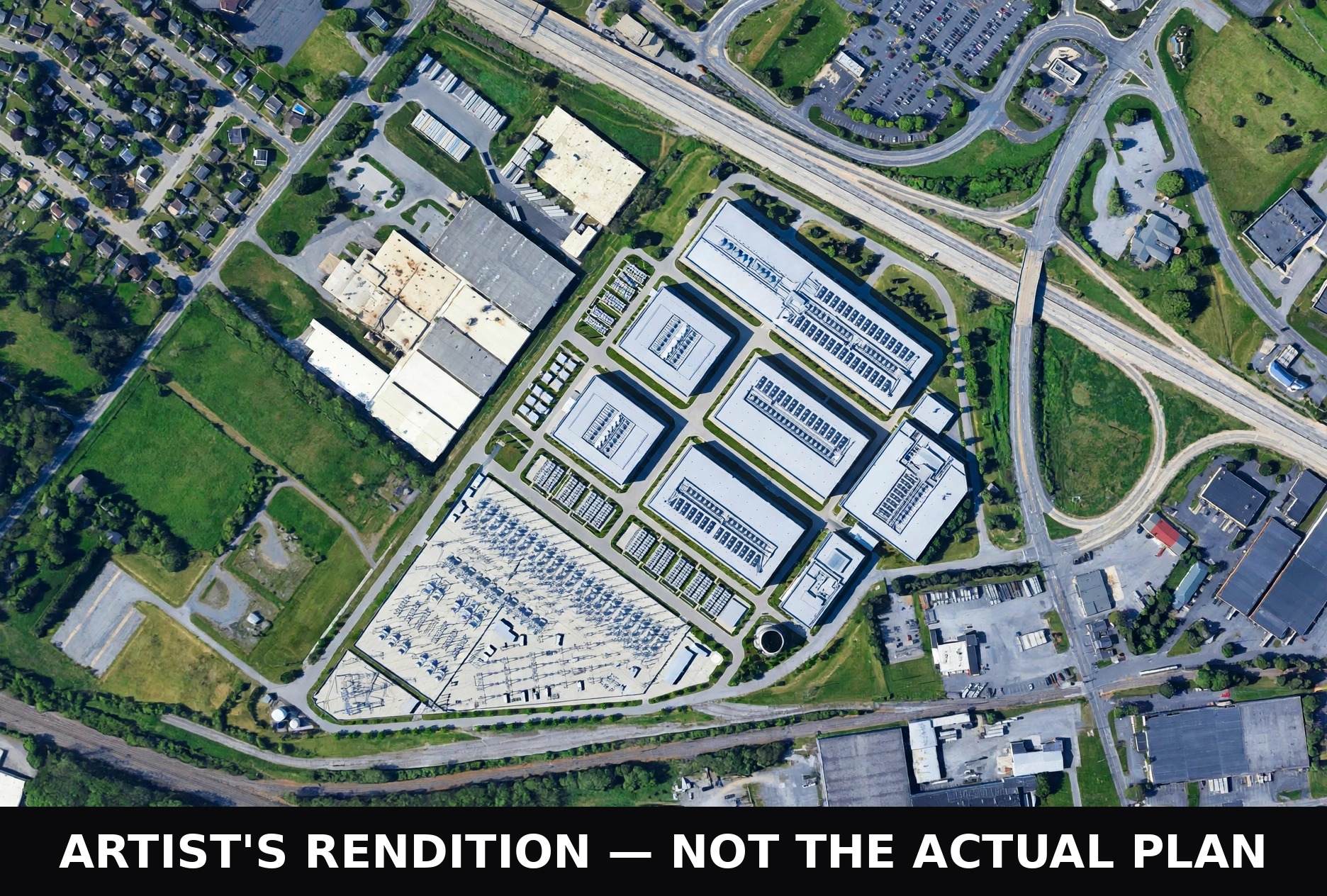
What: CoreWeave AI data center campus — 100 megawatts to start, built to scale to 300 MW
Where: 216 Greenfield Road (78-acre former printing plant site) plus a second site at 1375 Harrisburg Pike
Cost: ~$6 billion campus, backed by a $4 billion joint venture — Blue Owl Capital with Chirisa Technology Parks and Machine Investment Group
Who's building it: Turner Construction and Lancaster's own Wohlsen Construction
Jobs: ~600 construction jobs over two years; 70 permanent tech and operations roles at launch, growing toward 175
Timeline: Demolition underway now; first building targeted for summer 2027
Status: City planning commission approved the Greenfield plan on September 17, 2026; a resident group is appealing the Harrisburg Pike approval, with no hearing date announced yet
The Case for It: Why This Could Save Lancaster
Real money, already committed. This stopped being a proposal the day the money closed. A $4 billion joint venture doesn't happen on a hunch — institutional investors underwrite decades of local growth before writing checks this size. When national money and hometown money (Wohlsen is Lancaster-based) both show up, follow-on investment from suppliers and contractors tends to follow.
Real jobs, right now. About 600 construction jobs for roughly two years — and the developer's own PR now claims that number could reach 2,000, so treat the company's figure with appropriate skepticism. Of the $80 million-plus in subcontracts awarded so far, 77 percent went to regional businesses with roughly 90 percent local labor, according to the developer. Then 70 permanent tech and operations roles at launch, growing toward 175. In absolute terms that's modest, but these are well-paid households — the kind that buy homes, not rent rooms.
Guardrails most towns can only dream of. Here's what most coverage misses: Lancaster already extracted concessions. A $20 million community benefits agreement, signed in November 2025 and enforceable for 20 years, requires 100 percent clean electricity, recycled-water cooling, water-use caps, and noise limits — with real financial penalties if the developers miss. As one national analysis put it, it's among the first public community benefits agreements for a data center project anywhere in the country. Towns across America fighting data centers right now are begging for exactly what Lancaster already has on paper.
Infrastructure that stays. The developers are funding $200 million in local grid upgrades — concrete and copper that remains in Lancaster County regardless of how the campus evolves. Big power capacity plus big employers is what puts a region on the map for the next wave of development.
The Case Against It: Why This Could Ruin Lancaster
The jobs math is brutal. Six billion dollars divided by 70 permanent jobs is roughly $85 million per job at launch. A Senate investigation released in October 2026 framed the industry's footprint as roughly one worker per megawatt of power demand — a 100-megawatt site consuming the electricity of around 100,000 homes while employing about 100 people. (Fair framing note: it's a Senate Democratic staff report, not a law, and the companies dispute how grid costs should be allocated.) Construction paychecks end; the permanent footprint is small by any measure.
The electricity question is unresolved — and it's the one that hits your wallet. In Virginia, which shares our regional grid operator (PJM), one homeowner watched his monthly electric bill triple from about $100 to $281 after data centers connected nearby. PJM's capacity auction prices exploded from $28.92 to $329.17 per megawatt-day, with the grid operator attributing nearly two-thirds of the spike to data center demand. As Ohio's consumer advocate explained in September 2026, those are regional costs that ultimately flow through to consumers — roughly $18 more per month in western Maryland, $16 more in Ohio.
But the research genuinely cuts both ways. Other analyses argue that large, steady industrial customers can spread fixed grid costs across more usage and hold rates down. The $200 million in Lancaster upgrades is developer-funded. What nobody has answered conclusively is who pays for broader, long-term grid infrastructure as demand climbs. If you own a home here, this is the question to watch.
The appeal is still live. The city approved the Greenfield plan on September 17th, but a resident group is challenging the Harrisburg Pike approval in court — no hearing date announced yet. As local coverage noted, the zoning path this project took — approved without a full public zoning hearing — is itself part of the controversy.
The tax picture has holes. The state equipment sales-tax program lists CoreWeave entities as beneficiaries, but that's Harrisburg's program, not Lancaster's — and the local property-tax treatment of these sites remains publicly unanswered. Don't let anyone tell you the revenue story is settled in either direction.
What Happened in Other Towns: Both Endings Are Real
This is the part that convinced me the honest answer is "it depends what the town negotiates." Because both endings have already happened — same industry, opposite results.
The dream case: Quincy, Washington. A farm town of about 8,000 people where Microsoft built its first data center in 2006. Twenty years later: population up more than 40 percent, poverty cut in half, county property tax revenue up twelve-fold while residents' rates fell by a third. That revenue built a new high school, a hospital, a library, and a city hall. About 1,200 construction jobs were sustained every year for two decades — because they kept building — plus roughly 700 permanent operational roles. Data centers now pay around three-quarters of the town's property taxes. NPR visited in 2025 and found locals genuinely divided but the town transformed. Honest caveat for Lancaster: Quincy is a fraction of our size, so the "saved the town" effect doesn't scale one-to-one here.
The nightmare case: Virginia. Nearly 600 data center facilities and counting, almost 40 percent of the state's electricity going to data centers, residential bills surging, and a full-blown political backlash — 7 in 10 Americans now tell pollsters they oppose new data centers near them. The difference between Quincy and Virginia, every single time, is what the community locked in before the concrete was poured.
And 30 minutes from here, the debate is live. Columbia Borough is writing its own data center ordinance — no updated zoning protections until at least November, with residents pushing for the strictest rules the law allows. Lancaster County is becoming a case study in real time.
What This Means for Lancaster Homeowners
Strip out the noise and three things matter for your home's value:
Near-term demand is real. Hundreds of construction workers and contractors need housing — rentals, purchases, extended stays — for the next two years. Then up to 175 permanent well-paid households. In a county of 550,000 people that's a ripple, not a wave — but ripples move specific neighborhoods, especially near the sites and along the Route 30 corridor.
The institutional signal cuts both ways. A $4 billion joint venture betting on Lancaster validates the market for other employers and developers — upward pressure on demand. But the appeal, the electricity debate, and the national backlash are visible to buyers too, and uncertainty can make some purchasers hesitate.
The guardrails are the story. Lancaster did something most towns didn't: it got the $20 million community benefits agreement signed before the fight got ugly. Clean power requirements, water caps, noise limits, enforceable penalties. For a buyer comparing Lancaster to a town with no protections and a data center going up anyway, that's a genuine differentiator — and it's the kind of thing that shows up in how a market is perceived five years from now.
Timeline: What Happens Next
Now: Demolition underway at 216 Greenfield Road
Fall 2026: Resident appeal of the Harrisburg Pike approval pending — no hearing date yet; Columbia Borough aims to adopt its own data center ordinance in November
Summer 2027: First Greenfield building targeted for completion
Beyond: Campus scales from 100 MW toward 300 MW; $200M in grid upgrades roll out; permanent hiring ramps toward 175
I'll keep tracking this one — the appeal, the construction milestones, the hiring, and what it all does to Lancaster County housing. If you want to follow along, subscribe to the What's Happening Lancaster channel. And if you missed it, here's my breakdown of the Mosaic $200M tower breaking ground downtown.
So — Save Lancaster, or Ruin It?
The demolition crews are already on site. The money is closed. The appeal is the last lever, and the guardrails are already signed. The jobs are real even if they're fewer than the hype, and the power-bill question is still open.
That's the honest math. Now it's your call — drop your take in the comments on the video. And if you're wondering what all of this means for your home's value specifically, that's exactly what I do:
I do free video valuations for Lancaster County homeowners — your street, current comps, and what's coming (like this). Takes 30 seconds to request.
Sources & further reading
CRE Daily — CoreWeave's $4B funding for the Lancaster campus
Commercial Search — CoreWeave's $6B Pennsylvania announcement
Warren Senate office — October 2026 data center investigation findings
WHP 580 — Lancaster council votes on the $20M community benefits agreement
706report — Inside the Lancaster community benefits agreement
Ohio Consumers' Counsel — how data centers affect your electric bill (Sept 2026)
NPR/KSMU — a data center boomtown in rural Washington (Aug 2025)
Columbia Spy — borough faces data center zoning gap until November