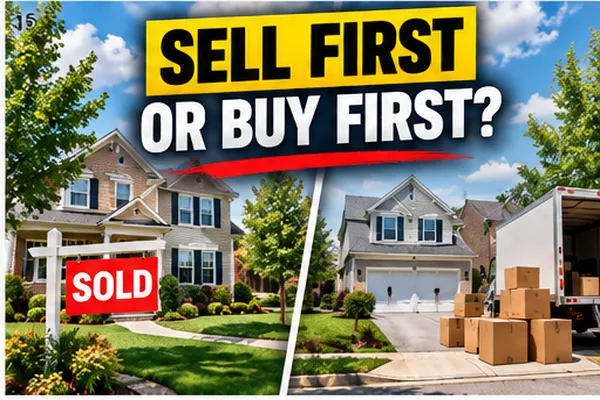
Should My Offer Be Contingent on Selling My Current Home?
Home contingencies in Lancaster PA
Short answer: making your offer contingent on selling your current home protects you, but it weakens your offer, sometimes a lot. In a competitive Lancaster market, most sellers would rather take an offer that doesn't depend on another sale. If you need to sell to buy, you usually have better options: a bridge loan, buying first and recasting later, or selling first with a rent-back. A home sale contingency still has its place, especially when a house has been sitting or the seller isn't seeing much interest.
What is a home sale contingency?
A home sale contingency makes your purchase depend on selling, and usually settling on, your current home by a certain date. If your house doesn't sell in time, you can typically walk away and get your earnest money back, depending on how the contingency is written.
In Pennsylvania, this is usually handled with a separate addendum to the standard agreement of sale. Many agents use forms from the Pennsylvania Association of Realtors. The addendum spells out the deadlines, whether your home has to be listed or under contract, and what rights the seller has while they wait.
Why sellers don't love it
From the seller's side, a contingent offer means two deals have to close instead of one. If your buyer backs out, both deals can fall apart. Sellers also worry about:
Taking their house off the market while your sale plays out
Your house being overpriced or slow to sell
Delays that push back their own move
That's why, when there are multiple offers, a contingent offer usually loses, even at a higher price.
How a seller's "kick-out" right works
Many home sale contingencies let the seller keep marketing the house after accepting your offer. If they get another acceptable offer, they notify you, and you then have a short window to remove your contingency (meaning you commit to buy whether or not your home sells) or step aside. The exact terms and timeframes depend on the specific addendum, so read it carefully with your agent.
For buyers, that means a contingency doesn't guarantee you the house. It buys you time, with conditions.
The numbers: what a contingency can cost you
Say you're bidding on a $400,000 home in Manheim Township. Another buyer offers $395,000 with no contingency. You offer $405,000 contingent on selling your current home.
A lot of sellers will take the $395,000. Why? Your extra $10,000 is about 2.5% of the price, and they're weighing it against the risk of your sale falling through, plus a month or two of extra carrying costs: mortgage, taxes, insurance and utilities. For a seller paying around $2,500 a month to carry the house, two months of delay can eat half of your premium on its own.
To win with a contingency, you'd often need to offer meaningfully more, or show that your home is already under contract.
Better options if you need to sell to buy
1. Get your house under contract first
A contingency tied to a home that's already under agreement, with a buyer who has a solid pre-approval, is much stronger than one tied to a house that isn't even listed yet.
2. Bridge loan or HELOC
Tapping your current home's equity can cover the down payment on the new one, so you can make a non-contingent offer. You carry two payments for a while, so the math has to work.
3. Buy first, then recast
If you can qualify for the new mortgage while still owning your current home, you can buy first, sell second, and then use your sale proceeds to pay down the new loan and lower your payment. I break that strategy down in buying before selling with a mortgage recast.
4. Sell first with a rent-back
Sell your current home and negotiate to rent it back from the buyer for a few weeks or months after settlement. You walk into your next offer with cash in hand, and you don't have to move twice.
5. Make the rest of your offer stronger
If you do go with a contingency, strengthen everything else: a strong pre-approval, healthy earnest money, flexible settlement timing and a realistic list price on your own home. My guide to writing a winning offer in Lancaster's competitive market has more ideas.
When a contingency makes sense
The home has been on the market a while with little interest
It's winter or a slower stretch, and the seller has fewer options
Your current home is priced right in a strong area and likely to sell fast
You truly can't carry two homes and the other options don't fit
FAQ
Can I make an offer on a house before selling mine in Pennsylvania?
Yes. You can make it contingent on your home selling, or line up financing, like a bridge loan or HELOC, so you can offer without a contingency.
Do sellers accept home sale contingencies?
Sometimes, especially when a home has been on the market a while or there's little competition. In multiple-offer situations, contingent offers usually lose.
What happens if my house doesn't sell in time?
It depends on the addendum. Typically you can cancel and get your earnest money back, or the parties can agree to extend the deadline.
What is a rent-back?
An agreement where you sell your home but stay in it for a set time after settlement, usually paying rent to the new owner. It lets you sell first without moving twice.
Need to sell before you can buy?
If you've found the house, or you're close, and you're worried that needing to sell first will cost you the deal, let's map out your options before you write an offer. Book a free, no-pressure call. We'll look at your equity, your timing and your financing, and figure out the strongest way for you to make the move.
About Albert Linsdell
Albert Linsdell is a Lancaster, PA real estate agent helping buyers and sellers across Lancaster County, including Lancaster City, Manheim Township, Lititz, Ephrata and Mount Joy. He's known for numbers-first pricing, creative financing strategies, and a trusted contractor network that helps sellers get top dollar. He's rated 5 stars across 24 Google reviews. Book a call with Albert.